Wool and worsted
Worsted wool does most of the work in most wardrobes, and the range inside it is far wider than the Super number on the swatch suggests. This is what the terms mean and which end of the range to choose in a hot, humid city — from a tailor who cuts the cloth rather than sells it. Part of our cloth and construction.
Worsted, and what it is not
Wool splits into two families before it is ever woven. Worsted yarn is combed first so the fibres lie parallel, then spun tight — smooth, strong, with a clear surface that takes a crease and holds a shape. Woollen yarn skips the combing, so the fibres lie every which way and trap air: warmer, hazier, softer. Flannel and tweed are woollens.
Nearly every suit is worsted, and in this climate that is not a close call. A woollen cloth insulates, which is exactly the property you do not want here.
The Super numbers, honestly
The Super number measures the fineness of the yarn, and nothing else. It is not a grade, it is not a quality score, and past a point it works against you.
| Range | How it feels | What it is for |
|---|---|---|
| Super 100s–110s | Sturdy, slightly dry hand | A suit worn weekly. The default, and rarely the wrong answer |
| Super 120s–130s | Noticeably smoother, still robust | Business wear where the cloth is meant to be noticed a little |
| Super 150s+ | Very fine, very soft, and delicate | Occasion suits. It will not survive weekly wear in this climate |
The useful way to read that table: finer yarn is more fragile yarn. A Super 150 is a genuinely lovely cloth for a suit worn a few times a year, and a poor decision for one worn every week. Being walked up the scale is the most common way to spend more and get less.
Weave and twist, which matter more
Two cloths at the same Super number and the same weight can behave completely differently, and the difference is how they are woven.
- High twist — the yarn is spun hard, so it resists creasing and springs back
- Open weave — visible space between yarns, so air moves through
- Plain weave — the workhorse; nothing clever, wears forever
- Twill — a diagonal line, drapes well, hides more
- Hopsack — basket-like and airy, excellent for a blazer here
The genuinely warm-weather end of this range — tropical weaves, and linen alongside them — is onlinen and warm-weather cloth.
What we will not tell you
Which mill it came from. Not because it is a secret but because naming mills is a claim about supply that we are not going to make loosely, and in this city bunch brands are quoted far more often than they are verified. Judge the cloth in your hand: hold it to the light, crush it in your fist and watch whether it recovers.
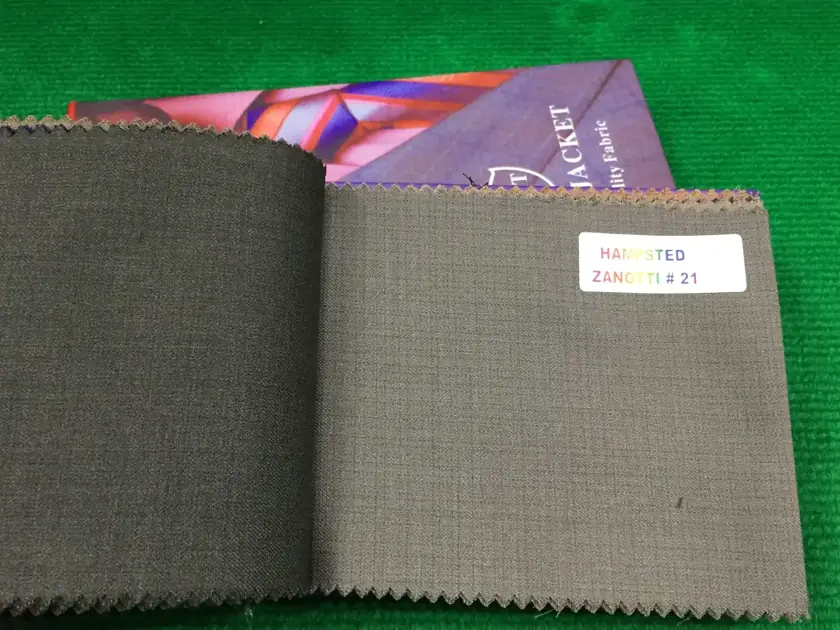
We bring the books to your hotel, office or home —where we come to you — and say what each cloth will do here, including when it is the wrong choice for you.
What gets made from it
Bespoke suits above all, andtrousers, blazers and separates where the weave choice changes most. What happens underneath the cloth once it is chosen is the other half of the decision — seefull canvas, half canvas and fused— and the appointments themselves are inhow a fitting works.
What our customers say
I used their tailoring service for the second time, and once again the experience was outstanding. Communication was smooth and professional, and the craftsmanship is truly exceptional — the quality of the materials, the precision of the fit, and the overall finishing exceeded my expectations. Everything was delivered to my hotel exactly at the agreed time. Highly recommended for anyone looking for top‑quality tailoring!
Michal HorkýRead it on Google
Good service! Good measurement High quality of fabrics
Stef AmlingRead it on Google
See the wool bunches
Held to your own window, not ours.
The Boss Tailor · All Bangkok - fittings at the customer's hotel, office or residence ·+66911051152 ·On Google
Common questions
- What is worsted fabric?
- Worsted is wool that has been combed before spinning so that the fibres all lie parallel, then spun tightly. That combing is the whole difference: it removes the short fibres that make woollen cloth fuzzy and warm, and leaves a smooth, strong yarn with a clear surface. Almost every suit you have worn is worsted. Woollens — flannel, tweed — skip the combing, which is why they look hazier and insulate better.
- Where can I buy wool suiting fabric in Bangkok?
- Not from us, and it is worth being direct about that. The Boss Tailor is a tailor rather than a fabric merchant: we hold bunch books and cut bespoke suits from them anywhere in Bangkok, and we do not sell cloth by the metre. If you want wool suiting to take away and have made elsewhere, a fabric merchant is who you are looking for. If you want the garment, that is what we do.
- Do higher Super numbers mean better cloth?
- They mean finer, not better, and past a point finer means more fragile. The Super number describes the fineness of the yarn: a Super 150 feels beautiful and will not take weekly wear, a Super 110 will take years of it. For a suit worn often in this climate, the lower number is the better cloth for the job, and a tailor who pushes you up the scale is selling the number rather than the garment.
- Is wool too hot for Bangkok?
- Not in the weave that suits it. Wool moves moisture away from the skin better than cotton does, and an open, high-twist worsted is more comfortable here than most alternatives at the same weight. What makes a wool suit unbearable is a dense smooth finish and a full lining, not the fibre. The lighter, more open end of the wool range is covered on our warm-weather cloth page.
- What weight should I choose?
- Somewhere around 230 to 280 grams covers most of what a Bangkok wardrobe needs, and the number matters less than how openly it is woven. The exception worth planning for is travel: if the suit will be worn somewhere genuinely cold, a heavier cloth is a different order rather than a compromise on this one. Say so before the cloth is chosen.